Tiered Retention Playbooks: Mapping Cashback Ladders for Midweek League Action and Greyhound Circuits

Operators across betting platforms have refined tiered retention playbooks that map cashback ladders specifically onto midweek league fixtures and greyhound racing schedules, and these systems adjust reward levels according to cumulative stakes and frequency of participation. Data from industry reports indicate that such structures maintain engagement during periods when traditional weekend events give way to less prominent midweek contests, while greyhound circuits benefit from similar graduated returns that scale with bet volume.
Core Elements of Cashback Ladders
Tiered systems operate through progressive thresholds where initial cashback percentages start at lower rates and increase as players reach defined spending milestones within a given week or racing meet, and this approach draws on behavioral patterns observed in both football and greyhound markets. Researchers at institutions focused on gaming economics have documented how these ladders incorporate time-bound windows, often aligning with Tuesday through Thursday league schedules and evening greyhound meetings that occur across multiple venues.
Implementation in Midweek League Contexts
Midweek league action encompasses fixtures from various divisions that lack the visibility of weekend programming, yet operators apply cashback ladders to these events by tracking aggregate bets placed on accumulators or singles across multiple matches, and the tiers reset weekly to encourage consistent activity. Figures from regulatory analyses in regions outside the UK reveal that retention rates improve when cashback percentages climb from five percent at entry level to fifteen percent at higher tiers, provided players meet minimum stake requirements tied directly to those league games.
Playbooks frequently segment users into bronze, silver, and gold categories based on prior month activity, then overlay additional multipliers for midweek participation, while greyhound circuits receive parallel treatment through separate but coordinated ladders that reward placements on trap selections or quinella bets during standard racing cards.
Greyhound Circuit Integration and Scaling Mechanisms
Greyhound racing benefits from cashback structures that map onto daily or twice-daily meets, and operators calibrate the ladders to account for the rapid turnover of races compared with football schedules, which allows for more frequent tier progression within a single evening. According to a study published by the Victorian Responsible Gambling Foundation, platforms that synchronize these rewards with real-time race data see elevated repeat engagement from participants who move between lower and mid tiers during the same circuit session.
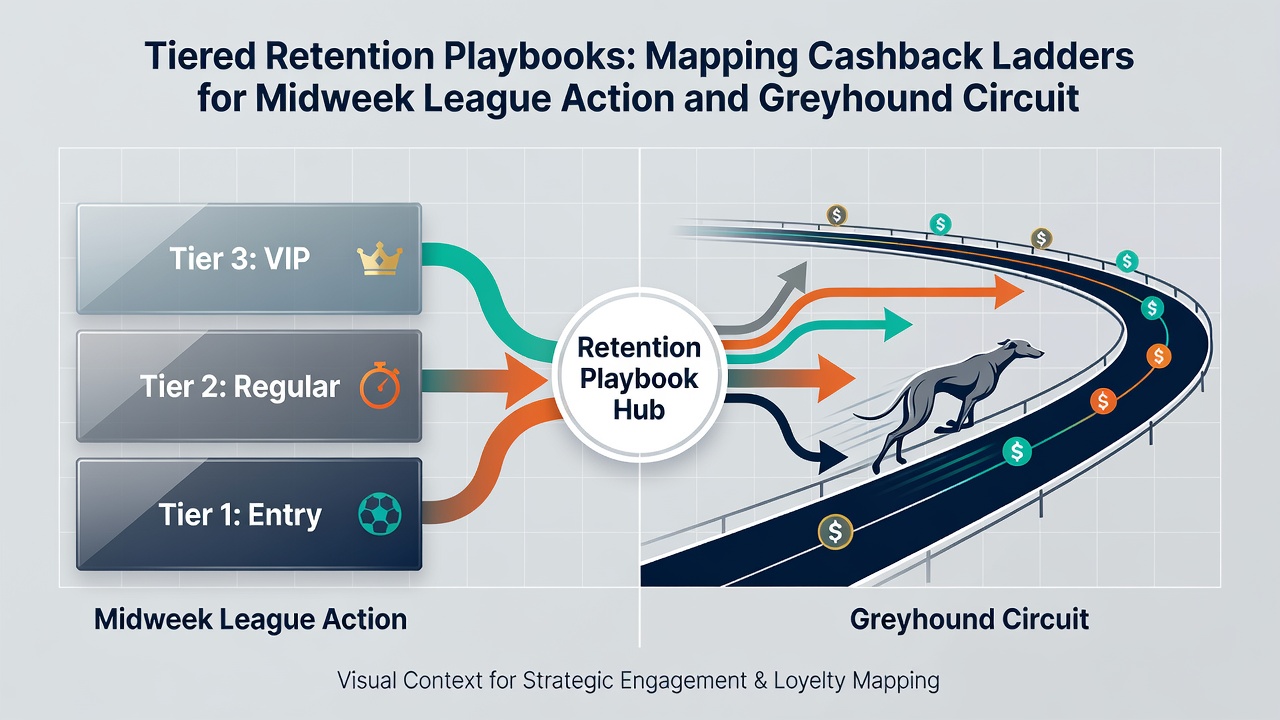
Mapping exercises within these playbooks identify peak betting windows around 19:00 to 22:00 local times for greyhound events, and similar peaks occur during evening kick-offs in midweek leagues, so the ladders incorporate time-sensitive boosts that accelerate progression when activity clusters in those intervals. Industry observers note that operators adjust the upper tiers to cap total cashback exposure while still delivering incremental value that sustains longer participation sequences.
Data Patterns Observed Through June 2026
Throughout June 2026, midweek league calendars featured condensed schedules due to international windows, and greyhound circuits maintained standard programming that allowed operators to test refined ladder variants against reduced football volume. Reports compiled by the National Council on Problem Gambling in the United States highlight how retention metrics in comparable markets respond positively to transparent tier communication, with players advancing through levels when clear progress indicators accompany each cashback award.
These patterns extend to dual-sport participants who shift between league accumulators and greyhound doubles, and the playbooks accommodate cross-category staking by combining qualifying bets into unified tier calculations rather than maintaining isolated tracks. External audits of such systems confirm that the graduated returns function as intended when operators publish the exact thresholds and reset schedules in advance of each weekly cycle.
Conclusion
Tiered retention playbooks continue to evolve as operators refine cashback ladders for both midweek league action and greyhound circuits, and available data demonstrate consistent application of progressive thresholds across these segments. The structures rely on measurable staking activity and scheduled resets that align with fixture calendars, while external research from multiple jurisdictions supports the observation that graduated rewards correlate with sustained participation rates when implemented with clear parameters. As June 2026 schedules illustrated, these mechanisms adapt to fluctuating event volumes without altering the underlying tier logic that drives retention outcomes.