Seasonal loyalty shifts: how recurring bonus structures support dedicated punters across winter flat meetings and league cup group stages
 Seasonal transitions in betting activity often align with calendar shifts that move punters between horse racing calendars and football competitions, where recurring bonus structures maintain engagement levels. Operators design these incentives to activate repeatedly during winter flat meetings, which feature all-weather tracks, and League Cup group stages, which run from late summer into autumn and create midweek betting opportunities. Data from industry reports indicate that such programs encourage consistent participation because they tie rewards directly to volume rather than one-off deposits.
Winter flat meetings concentrate on tracks equipped for colder months, and these events draw dedicated punters who follow form across multiple fixtures each week. Recurring bonuses typically include reload credits that reset after every qualifying bet cycle, allowing users to extend their stakes without additional outlay. League Cup group stages meanwhile generate frequent matches across multiple teams, and the same loyalty frameworks apply here through enhanced accumulator returns that trigger on repeated selections. Observers note that punters who maintain activity in both domains receive layered benefits because the structures reset on predictable schedules tied to fixture lists.
Bonus mechanics across racing and football calendars
Recurring structures operate through points-based systems or cashback thresholds that accumulate over defined periods, such as a calendar month or a competition phase. During winter flat meetings, these often manifest as percentage returns on losing bets placed on handicap races or novice events, with the credit applied automatically to the next deposit window. League Cup group stages receive parallel treatment through free bet tokens earned after a set number of in-play wagers, and the tokens carry forward if unused within the group phase. Research from the University of Nevada Gaming Research Center shows that operators who align these resets with competition calendars achieve higher retention rates compared with static promotions that ignore seasonal patterns.
Punters who follow both sports benefit because the bonuses do not compete with each other; instead, they stack across separate accounts or wallets designated for racing and football. This separation prevents overlap while still rewarding cross-category activity. For instance, a user who places daily bets on winter flat cards can unlock a separate League Cup multiplier once football fixtures resume midweek, and the system records each stream independently.
Loyalty shifts between winter periods and competition phases
Activity patterns reveal that many punters adjust their focus as one season winds down and another intensifies, yet recurring bonuses reduce the friction of these shifts. Winter flat meetings provide steady volume through December and January, while League Cup groups create concentrated bursts around specific matchdays. Operators respond by extending the validity windows of earned credits so that points accumulated during racing carry value into football weeks without expiry penalties. Figures from the European Gaming and Betting Association indicate that programs with flexible rollover rules see sustained weekly engagement rather than sharp drops when one sport pauses.
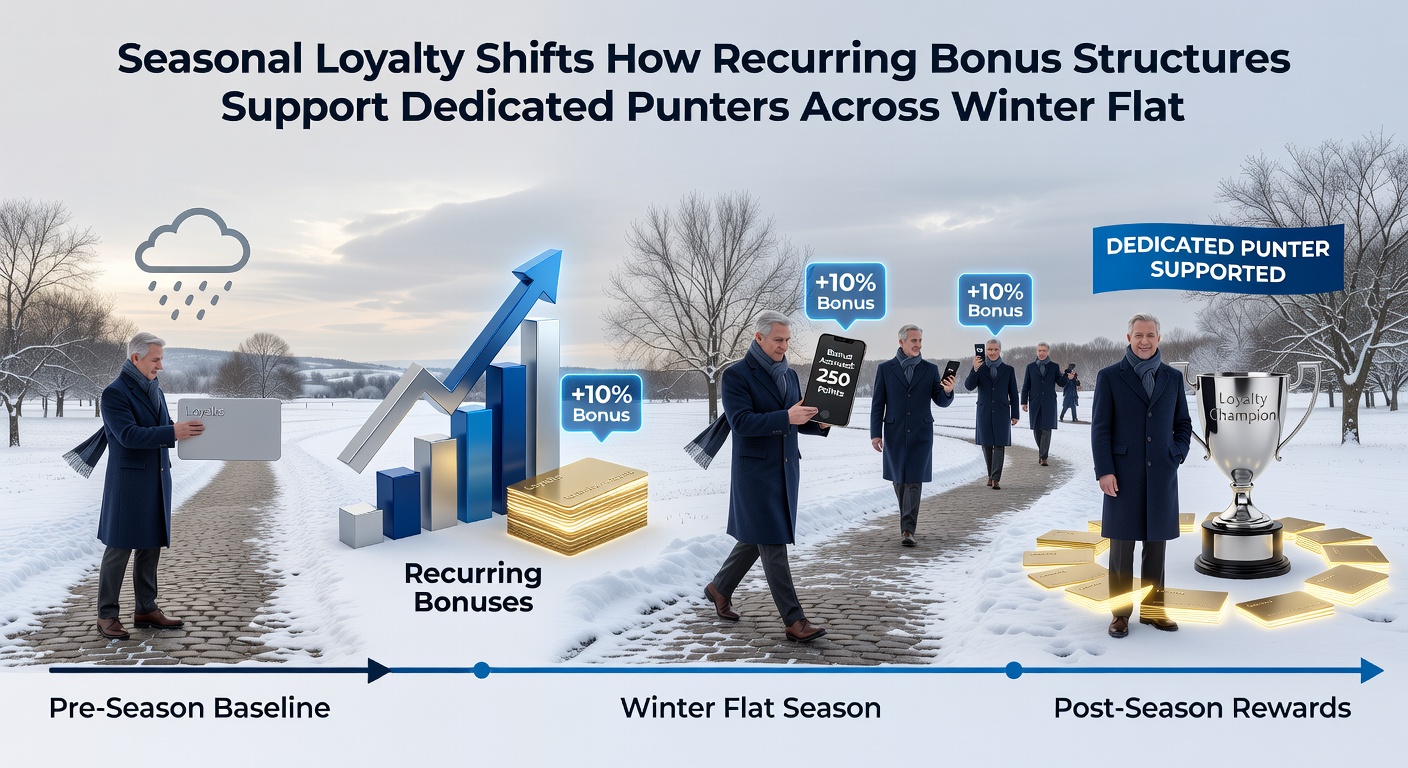
Those who track multiple operators often discover that some platforms synchronize their reload schedules with major racing festivals and cup draw dates, creating seamless transitions. This synchronization supports punters who prefer one primary platform because the recurring elements activate automatically once activity thresholds are met in either category. The result appears in aggregated user data as steadier deposit patterns across the colder months rather than isolated spikes around individual events.
Operational examples and structural variations
Take one operator that runs a tiered loyalty club where points earned on winter flat each-way bets convert into League Cup stake boosts once football returns. The conversion rate remains fixed, and users receive notifications when thresholds near completion. Another platform applies cashback on net losses across both domains within a single rolling period, so a punter who experiences a quiet week at the races can offset that through League Cup accumulators without starting a new qualification cycle. These variations demonstrate how the same recurring principle adapts to different user preferences while maintaining continuity.
June 2026 planning cycles already incorporate lessons from previous winter-to-cup transitions, with operators testing extended validity periods for loyalty credits that span the quiet summer months. Such adjustments aim to preserve momentum for users who maintain accounts year-round rather than seasonal ones.
Conclusion
Recurring bonus structures function as connective tissue between winter flat meetings and League Cup group stages by delivering predictable rewards tied to ongoing activity. The mechanics rely on reset timers, cross-category point conversion, and flexible validity windows that accommodate shifting fixture calendars. Data from multiple research bodies confirm that these frameworks support retention by reducing the need for punters to rebuild qualifying status after each seasonal change. Operators continue to refine the systems to match evolving competition schedules, ensuring that dedicated users encounter consistent value regardless of which sport dominates their current focus.